
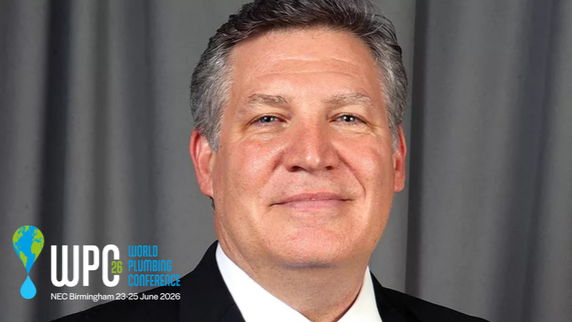
By David Viola , Chief Executive Officer, International Association of Plumbing and Mechanical Officials (IAPMO)
At IAPMO, we have always viewed plumbing as one of the most important public health systems in the built environment. As pressure grows around public health, sustainability and global water security, the plumbing industry is being asked to deliver far more than just functional infrastructure. Plumbing is recognised as a critical contributor to community wellbeing, environmental performance, and long-term resilience.
The Expanding Role of Plumbing in Public Health and Sustainability
Across the sector, conversations are evolving beyond installation alone and towards a broader understanding of plumbing’s role in shaping healthier and more sustainable built environments. Today’s professionals must navigate an increasingly technical landscape that includes water quality management, digital monitoring systems, recycled water strategies, energy efficiency, and changing public health requirements.
This shift is undoubtedly redefining what competency looks like within the profession. Traditional craftsmanship remains fundamental, but technical knowledge, adaptability, and continuous learning are now equally essential. As systems become more sophisticated, the challenge facing the industry is not simply innovation itself, but ensuring the workforce is equipped to implement that innovation safely and effectively.
Workforce Competency and the Impact of Emerging Technologies
The success of emerging technologies, from smart plumbing systems to low-carbon infrastructure, will ultimately depend on the capability of the professionals designing, installing, and maintaining them. In many ways, the defining issue for the next phase of the industry will be whether workforce development can keep pace with system complexity.
Plumbing has always played a central role in protecting communities, but emerging risks are creating new responsibilities across the sector. Concerns around water stagnation, pathogens in premise plumbing, thermal shock, scalding, material safety, and improperly designed alternative water systems are reinforcing the importance of high standards and technical oversight.
Balancing Water Conservation, Safety and System Performance
As buildings become more efficient and water conservation intensifies, the industry must ensure that sustainability and safety must advance together. Reducing water use is important, but it cannot be the only measure of success. Oversized systems, low-flow environments, and poor management of water age can compromise water quality and system performance. The future of conservation depends on using water more intelligently through smarter fixture technologies, leak detection, efficient hot water delivery, rainwater harvesting and improved system design.
Plumbing also plays a growing role in decarbonisation, with hot water systems, pumping, treatment, and wastewater management all carrying significant energy and carbon impacts. As governments pursue net-zero goals, plumbing systems are becoming central to climate resilience and sustainability conversations.
The Changing Perception of Plumbing Professionals
For many years, plumbing has often been undervalued despite its direct impact on health, safety, and quality of life. However, the sector is recognising that plumbing professionals are not simply installers, they are frontline contributors to public health protection, environmental stewardship, and climate resilience.
The future of the profession will therefore be shaped not only by the systems being developed, but by the people entering the industry and the standards supporting them. Apprenticeships, competency-based licensing, ongoing education, and stronger professional pathways will all remain critical if the sector is to meet rising expectations. Lowering standards is not the answer to workforce shortages. The better path is to modernise training, improve access to the profession, and ensure that those entering the trade are prepared for the increasingly technical responsibilities they will carry.
Plumbing’s Role in Global Challenges and Future Resilience
What is becoming clear is that plumbing now sits at the intersection of some of society’s most pressing challenges. Water security, sustainability, public health, resilience, and access to safe water and sanitation are no longer separate conversations. They are increasingly interconnected, and plumbing plays a role in all of them.
The question facing the industry is no longer whether change is coming, but how effectively the sector will respond to it. From my perspective as CEO of IAPMO and Chair of the World Plumbing Council, these conversations are not theoretical. They go directly to the future of public health, the credibility of our profession, and the ability of our industry to meet the needs of communities around the world.
For those committed to the future of public health, sustainability, water resilience, and the evolution of the plumbing profession, the conversations taking place across the sector have never been more important.