
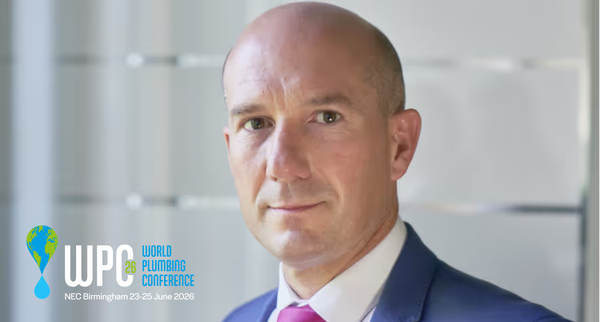
Jonathan Samuel, Managing Director of WaterRegs UK
Plumbing has always been more than simply pipes and fittings. Today, this is more apparent than ever before. It has become a truly hybrid profession, where craftsmanship meets digital tools, sustainability targets, and increasingly complex compliance requirements.
For example, we’re seeing rapid growth in water-efficient systems, such as greywater reuse and rainwater harvesting. We’re also seeing further integration of low-temperature technologies, e.g. heat pumps. Finally, there are stronger expectations around water quality, safety and environmental performance. At the same time, the sector is grappling with the widening skills gap, with tens of thousands of new professionals required in the coming years.
This presents a clear opportunity: the next generation of professionals must be both technically skilled and future-ready. However, this raises a key question around how we can define and maintain competence and ability in an industry in flux.
The challenge which underpins everything
By 2050, it’s thought that we will face a daily shortage of billions of litres of clean water. This isn’t a distant scenario, it’s a looming reality.
There is no single or simple solution to this challenge. Instead, an effective response needs to consider three things.
- Technology (reuse, harvesting, smarter systems)
- Governance (standards, allocation, accountability)
- Behaviour (rethinking how we use water day-to-day)
Plumbing sits at the centre of each installation, with system design and retrofit decisions having a direct impact on how efficiently, or not, water is used.
The role of Net Zero
If we’re serious about reaching Net Zero by 2050, there’s no other choice but to make plumbing a key part of the conversation. In fact, it’s one of the most immediate and practical levers we currently have.
When we consider that most of the buildings that will be standing in 2050 already exist, and the well-documented relationship between water and energy efficiency, this places the industry at the frontline of change. Whether that’s retrofitting homes, installing low-carbon heating, or selecting more sustainable materials.
The question shouldn’t be if the role of the plumber will evolve. Instead, it should be how quickly we can support the sector through change.
The defining challenge ahead
One of the most critical, yet often overlooked, aspects of plumbing is its role in protecting public health.
From mitigating legionella risks to ensuring sanitary conditions in the home, the consequences of poor installation practice can be severe. These are all everyday risks, which are also all preventable, which brings us back to competence across the sector.
With plumbing systems directly impacting health, safety and environmental outcomes, the following question must be asked: “Should there be a clearer way to guarantee that only qualified professionals undertake this work?”
The challenge now is how we can scale low-carbon, efficient systems quickly enough without compromising health and safety or quality.
To get there, the industry must:
- Train more professionals
- Strengthen and modernise existing standards
- Embrace smarter monitoring and digital tools
- Retrofit at scale
Critically, competence is not optional. There’s now a need for it to be embedded into each install and every decision made.
So, should there be a license to plumb?
The answer to this may not be a binary, yes or no answer. However, it is a conversation that the industry can no longer afford to avoid.
I’ll be sharing more thoughts during my panel discussion, ‘Should there be a license to plumb?’, on Tuesday afternoon of the World Plumbing Conference 2026 at Birmingham’s NEC.
If you’re passionate about the future of the professional, the changing role of legislation and how we can balance growth with responsibility, I hope to see you join the discussion.
To buy tickets and to see the full agenda for this year’s World Plumbing Conference.